
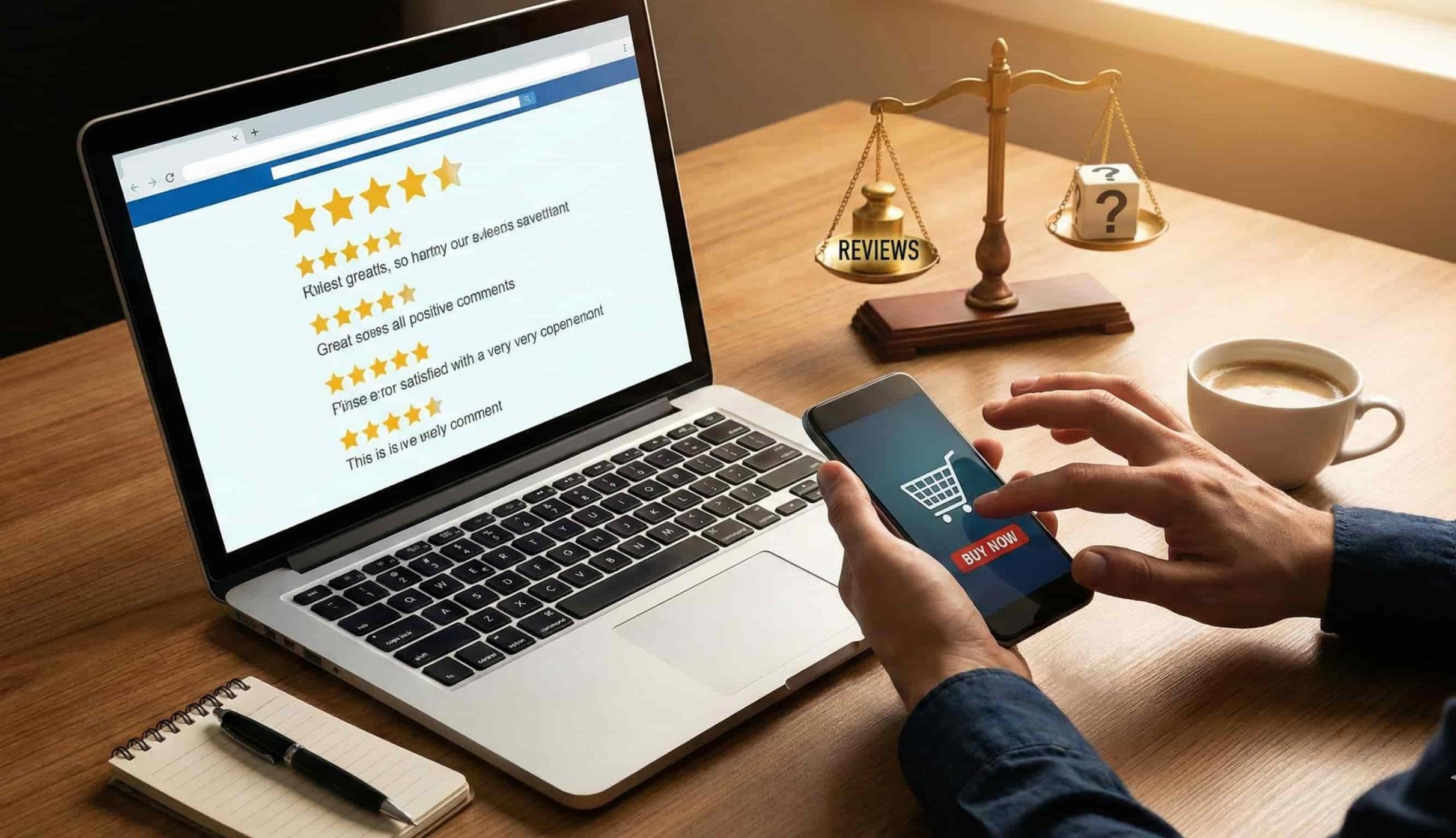
Imagine you’ve been eyeing a product for weeks. You’ve read dozens of glowing reviews, all raving about how amazing it is. You’re convinced that it’s the perfect choice for you until you hesitate. You wonder, “What if it’s not as good as they say?” or “What if I’m making the wrong decision?” Even though the reviews are overwhelmingly positive, a lingering sense of doubt holds you back from hitting the “buy” button.
This scenario isn’t uncommon. In fact, despite the increasing importance of reviews in today’s digital age, many potential customers still hesitate to make a purchase after reading positive feedback. So, why does this happen? If reviews are supposed to provide social proof and build trust, why do they sometimes fail to convert visitors into buyers?
The truth is, even the best reviews don’t always inspire immediate action. In many cases, it’s not the reviews themselves that are the issue it’s how they’re perceived. Customers may still be skeptical, unable to connect emotionally with the words on the screen. They may feel the reviews lack authenticity or fail to address their specific concerns. As a business owner, this leaves you asking: What can you do when positive reviews aren’t enough to close the deal?
In this blog, we’ll explore the reasons why customers hesitate even after reading glowing reviews and how you can overcome these challenges by enhancing your approach to social proof and testimonials.
While reviews are crucial in shaping consumer trust, skepticism, lack of emotional connection, vague details, and inconsistent quality can all contribute to hesitation, even after reading positive feedback. To overcome these challenges and effectively convert hesitant customers, businesses should embrace authentic video and audio testimonials. These testimonials build trust, create stronger emotional connections, and provide detailed, consistent feedback that helps potential customers make informed decisions.
Cognitive dissonance is a psychological theory that explains how individuals experience discomfort when they hold conflicting beliefs or attitudes. In the context of consumer behavior, this means that even after reading positive reviews, customers may still feel uncertain about making a purchase due to conflicting thoughts. They might think, “This product has great reviews, but what if it doesn’t work for me?”
Even though reviews may be overwhelmingly positive, cognitive dissonance can cause hesitation because the customer’s mind is trying to reconcile two opposing beliefs:
This inner conflict leads to uncertainty, where customers may continue to delay their decision, seeking reassurance or more proof that the product will meet their expectations. To reduce cognitive dissonance, businesses can offer more personalized, relatable testimonials, such as video testimonials, where real customers share specific experiences and show how the product addressed their particular needs.
While rational decision-making is rooted in logic, where customers weigh the pros and cons of a purchase, emotional decision-making plays a more significant role in the consumer behavior process. Studies show that emotional responses to a product or brand can be far more influential than rational thoughts. In fact, a Harvard Business Review article revealed that emotions drive 50% of purchasing decisions, while rational aspects only account for 50%.
Even though positive reviews might appeal to the rational side of a customer’s brain, they often don’t tap into the emotional drivers that are essential for triggering a purchase. Customers need to feel a personal connection to the product, the brand, and even the people sharing the reviews. This is where video testimonials become powerful: they allow potential buyers to see real people sharing their genuine emotions, which can have a much stronger impact than written text alone. The facial expressions, tone of voice, and body language in a video review help create that emotional connection that might have been missing from text-based feedback.
In this context, businesses need to focus on creating emotional appeal in their reviews, making customers feel excited, confident, or even relieved by their decision. This helps move them from the consideration phase to the purchase phase by creating an emotional connection that outweighs rational hesitation.
Fear of missing out (FOMO) and buyer’s remorse are two powerful psychological forces that can cause hesitation in potential customers, even after reading positive reviews. Customers might worry about making the wrong decision, leading to fear-driven inaction.
To mitigate this, businesses can use reassurance techniques like:
The role of fear in decision-making is powerful, and it’s crucial for businesses to address these fears head-on with strategies that reduce uncertainty and increase confidence in the purchasing process.
While text-based reviews remain a common and valuable form of social proof, they often fall short when it comes to building deep trust with potential customers. The problem lies in their impersonal nature. Text reviews, no matter how positive, can feel like they are just words on a screen, lacking the emotional connection and authenticity that a potential customer needs to feel confident in their decision.
The visual and auditory components of human interaction—such as tone of voice, body language, and facial expressions—play a crucial role in communication. Text reviews, however, can only convey so much. They fail to capture the nuances of a customer’s emotions and can sometimes come across as too clinical or generic. This creates a gap in trust, as customers may wonder if the reviews are exaggerated or if the reviewer was simply following a script.
Video and audio testimonials, on the other hand, bring reviews to life. They provide a visual representation of a real person sharing their honest feedback, creating a genuine connection. By showcasing real people with real experiences, these formats allow businesses to establish trust in a way that text cannot. Video reviews allow potential customers to see and hear the emotions behind the words, making them feel more authentic and relatable.
The growing problem of fake reviews is another significant limitation of text-based feedback. With the rise of online shopping and the importance of reviews, some businesses resort to paid reviews or even fabricate positive feedback to boost their credibility. This creates a trust issue, as customers start questioning the authenticity of even legitimate reviews.
Fake reviews have become so pervasive that many consumers are skeptical of all reviews, assuming that some of them might be misleading. This skepticism doesn’t just apply to overly positive reviews but extends to seemingly negative reviews as well. When reviews can be purchased or manipulated, it becomes difficult to discern genuine feedback from fabricated content.
This is where video and audio testimonials can provide a solution. Video reviews are much harder to fake because they show real people speaking about their experience. The visual evidence in a video makes it much easier for customers to see the authenticity of the review. Unlike text, which can be written and rewritten by anyone, video and audio require real, live people, making it more difficult to manipulate. When businesses use real customers to share their stories through video, it reassures potential buyers that the feedback they’re seeing is honest, genuine, and not influenced by external factors.
Another limitation of text reviews is that they often fail to address specific customer concerns. For example, a potential buyer might want to know how a product performs in specific situations or how it compares to similar products. However, many text reviews are vague or focus on general statements like, “This product is great!” or “I love it!” Without context or specific examples, these reviews fail to provide the depth of information that customers need to make an informed decision.
In contrast, video testimonials offer much more contextual richness. A video review can provide a detailed walkthrough of how the product works, including how it fits into the customer’s lifestyle or solves a specific problem. These reviews can also showcase how the product performs in real-life scenarios, answering questions that potential customers may have. For instance, a customer reviewing a pair of running shoes might demonstrate how they fit, how comfortable they are during a run, and how they hold up in different weather conditions. This type of insight is incredibly valuable for someone who is on the fence about purchasing, as it provides a deeper understanding of the product’s true performance.
Furthermore, video reviews can allow businesses to address frequent customer concerns more effectively. A customer might have questions about a product’s durability, ease of use, or effectiveness in specific situations. Video testimonials can directly address these concerns, offering a transparent and detailed response. This added layer of context is what many customers need to move past hesitation and feel confident in their purchasing decision.
When it comes to influencing potential customers, social proof is one of the most powerful tools businesses can leverage. Video and audio testimonials play a crucial role in closing the trust gaps that often exist with written reviews.
Unlike text reviews, which can sometimes feel impersonal or lacking in emotional depth, video testimonials provide a powerful connection between the business and the audience. These reviews feature real people sharing their genuine experiences, allowing potential customers to see the product or service in use and hear about it from someone they can relate to. The visual aspect of video testimonials makes them more authentic and relatable, showcasing real people with real emotions and reactions, which text-based reviews cannot fully convey.
Moreover, audio testimonials take this a step further by adding voice inflections and tone, which create an additional layer of authenticity. A person’s voice can convey emotion, sincerity, and conviction in ways that words on a page simply cannot. This human element helps potential customers feel that they are not just reading opinions but hearing from someone who has had a tangible, real-world experience with the product.
Video and audio testimonials, therefore, provide a more holistic experience for the viewer, combining visual and auditory cues that build a stronger, more convincing case for the product or service being offered.
Even with the most positive text-based reviews, skeptical buyers often hesitate before making a purchase. They might question the authenticity of the reviews or wonder if the product will truly deliver as promised. This is where video testimonials shine, offering an unmatched advantage over text-based reviews.
Skeptical buyers often need reassurance—they want to see real-life examples of how the product has worked for others. Written reviews, though valuable, can seem like they could be manipulated or exaggerated, especially when businesses only showcase a handful of positive reviews. In contrast, video testimonials offer a more transparent and credible form of social proof. It’s much harder to fake a video where someone is speaking about their authentic experience, and that visual evidence can be highly persuasive for customers who are on the fence.
For example, seeing a customer talk passionately about how a product helped them solve a specific problem builds trust and relatability. The customer may mention how it exceeded their expectations, how easy it was to use, or how it made a positive impact on their life. This type of personal, detailed feedback is much more convincing than generic text reviews, as it provides the emotional connection and trust signals that many buyers are looking for.
By showcasing video testimonials, businesses can increase conversions by addressing the common doubts of hesitant customers. Video social proof not only provides a more compelling narrative but also taps into the psychological need for social validation, which is key in decision-making.
Success stories are a testament to the power of video testimonials in influencing customer behavior and driving conversions. Many businesses that have adopted TrueTestify’s video testimonial platform have seen a significant improvement in customer trust and sales conversion rates.
These success stories illustrate how video testimonials can significantly boost customer confidence, overcome hesitation, and ultimately lead to higher conversion rates. Real-life experiences, shared through the eyes and voices of satisfied customers, provide the authenticity and social proof that today’s skeptical buyers need.
To overcome hesitation and build trust with potential customers, businesses must focus on gathering authentic and emotional testimonials. Simply asking for reviews is no longer enough; the reviews need to resonate with the audience on a personal level.
Here are some tips for businesses to encourage emotional engagement through video and audio testimonials:
By fostering this emotional connection, businesses can ensure that their testimonials are not just informative but also compelling and relatable, which helps to overcome customer hesitation.
Another effective way to encourage customers to leave reviews, especially video and audio testimonials, is by offering incentives. Customers are more likely to take the time to create content if they feel like they’re getting something valuable in return.
Here are a few strategies for incentivizing reviews:
Incentives can be a win-win for both businesses and customers, creating a cycle of engagement that benefits both parties. By rewarding customers for leaving video and audio reviews, businesses can gather more compelling testimonials that help convince hesitant buyers.
Once businesses have collected valuable video and audio testimonials, it’s equally important to optimize their display across various platforms to ensure they’re seen by the right audience at the right time.
Here’s how businesses can strategically display testimonials to maximize impact:
When video and audio testimonials are displayed in strategic, high-traffic areas, they become more than just a review; they become a conversion tool that overcomes hesitation and builds trust with potential customers.
Despite the wealth of online reviews available, many customers still hesitate to make a purchase, primarily due to trust issues, lack of emotional connection, and concerns about the authenticity of the feedback. Text-based reviews, while valuable, often feel impersonal or can be perceived as biased or fake. Video and audio testimonials, on the other hand, bridge these gaps by providing genuine, emotional, and relatable feedback from real customers. These formats are harder to manipulate and help potential buyers connect on a deeper level with the experiences being shared.
Authenticity is crucial in building trust and overcoming hesitation. By using TrueTestify’s platform, businesses can easily integrate video and audio testimonials into their marketing strategy, offering an authentic, transparent form of social proof that resonates with customers and drives conversions.
If you’re ready to eliminate skepticism and convert hesitant customers into loyal buyers, we invite you to explore how TrueTestify can help you leverage the power of authentic reviews through video and audio testimonials. Start building trust and increasing your sales today!